5 Steps to Finding Food Assistance in Colorado
November 17, 2026

If you’re looking for food assistance for yourself or your family, it can be hard to know where to begin. You might be looking for help for the first time, or you may want to see what’s available closer to home.
Colorado has several kinds of food assistance, including SNAP benefits, local food pantries, and community meal programs. Each works a little differently. Some programs ask you to apply or meet eligibility requirements, while others let you stop by during posted hours.
These five steps can help you understand your options and find food assistance that fits your household’s needs.
Need food right away? Jump to the resources in step 3 and contact a nearby pantry or meal program to ask when food is available. You can also contact 2-1-1 Colorado for help finding local options.
1. Identify the Type of Food Support You Need
Different resources meet different needs, so you’ll want to consider immediate versus ongoing needs, groceries versus prepared meals, and transportation or storage limitations.
Some food pantries or food banks provide groceries to prepare at home, while others offer prepared meals, food deliveries, or assistance for certain populations.
Before you start searching, consider what would be most helpful for you or your household:
- How soon do you need food? Are you looking for immediate assistance, ongoing support, or both?
- What type of food would be most useful? Do you have access to a kitchen and refrigerator?
- Who needs support? Are you looking for food for yourself, children, or your entire household?
- Are there other considerations? Consider dietary needs, mobility limitations, transportation, and pickup times.
Use your answers to decide what to look for as you explore the options below. For example:
- If you need food today, contact a pantry or meal program to ask about its next available distribution.
- If you don’t have a kitchen or refrigerator, look for prepared meals or food that doesn’t require cooking or refrigeration.
- If transportation is difficult, look for delivery options or pickup locations you can reach.
- If you need ongoing help with groceries, explore SNAP alongside local food resources.
You may need more than one type of support. These questions can help you focus your search on options you can use.
2. Understand Your Food Assistance Options
Food assistance comes in many forms, and understanding the differences can help you determine where to start.
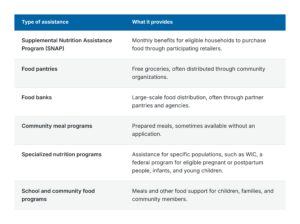
Each type of assistance operates differently. For example, SNAP provides benefits that can be used to purchase eligible groceries, while food pantries distribute food directly to individuals and families. Food banks often supply the organizations that distribute food rather than serving individuals directly.
You may also qualify for more than one type of assistance, depending on your circumstances and each program’s requirements.
3. Find Food Resources in Your Community
Once you have a better idea of the support you need, the next step is finding organizations that serve your area.
Because there isn’t one centralized directory of every food assistance option, exploring multiple sources can help you identify programs that meet your needs.
A few places to start include:
- RMHS’ Food Access Resources Across Colorado’s Front Range: This guide brings together food pantries, meal programs, and other assistance options across the Front Range, including available information about locations, eligibility, hours, and contact details.
- 2-1-1 Colorado: Search for local food assistance and other community resources by ZIP code or connect with a resource navigator.
- Local food banks and community organizations: Many maintain online pantry directories, food distribution schedules, or information about additional assistance programs.
- School districts and county human services departments: These organizations can provide information about school meal programs, federal nutrition benefits, and other assistance available to eligible individuals and families.
For families with school-age children, it’s also worth checking what meals and food resources are available through your child’s school district. For example, Denver Public Schools provides information about its Food and Nutrition Services, including school meals and related resources.
Tip: Start with resources close to where you live, work, or regularly travel. Finding assistance that fits into your routine may make it easier to access support consistently.
4. Check Eligibility and Accessibility
Finding a food assistance program is only part of the process. You’ll also want to confirm that you qualify and can access the resource when you need it.
Different programs have different requirements. Some may ask about household size, income, or where you live while others provide food without extensive eligibility screening.
Before visiting or applying, check:
- Whether the program serves your ZIP code, city, or county
- Whether there are income or household eligibility requirements
- Whether identification, proof of address, or other documentation is requested
- Whether an appointment or registration is necessary
- How often you can receive food
Not every pantry requires identification, proof of income, or a formal application. Since requirements vary, it’s worth asking rather than assuming you won’t qualify.
Consider accessibility too.
If you don’t have a car, look for resources accessible by public transportation or programs offering delivery or mobile food distribution. If you work during typical business hours, check whether evening or weekend distributions are available.
You may also want to ask about language assistance, dietary accommodations, physical accessibility, or whether someone else can pick up food on your behalf.
Confirming these details before visiting can save time and help you identify options that work for your circumstances.
5. Explore Multiple Resources and Keep Your Options Open
You don’t necessarily have to rely on just one food assistance program. Depending on eligibility and program rules, different resources may complement one another.
For example, someone receiving SNAP benefits may also visit a local food pantry when their benefits don’t cover all their groceries. A family may qualify for school or after-school meals alongside other food assistance programs. For example, the City of Denver offers after-school meals to youth ages 3-18 throughout the year through a program called Tasty Food.
Because pantry schedules, eligibility requirements, and distribution locations can change, it’s helpful to keep a short list of reliable options. Include each organization’s contact information, hours, location, and any documentation or registration requirements.
If you need help navigating your options, consider reaching out to:
- A case manager or other support professional, if you receive case management services
- 2-1-1 Colorado for help identifying community resources
- Local community organizations that may know about additional food assistance programs or help with applications
Exploring multiple resources and keeping your information current can help you adjust when your circumstances or available supports change.
Taking the Next Step Toward Finding Food Assistance
Start with one resource that looks like a good fit and contact the organization to confirm when food is available and what you’ll need to bring. If you’re unsure where to look, 2-1-1 Colorado can help you explore local options.
If you’re also experiencing housing instability, RMHS programs such as Mission Supports, INCLUDE, and Homes for All Veterans help eligible individuals navigate housing resources, benefits, and other supports.
Explore RMHS’ Food Access Resources Across Colorado’s Front Range guide to find food pantries, meal programs, and other assistance in your community.